Master Development with an Online Agile Course
Master Development with an Online Agile Course
Think of an online Agile course as a hands-on training programme designed to get your team thinking and working in a more flexible, iterative way. It’s all about moving away from those rigid, old-school project plans and embracing a more collaborative and customer-centric method for building software.
Why Agile Is Essential for Modern UK App Development
So, why has Agile gone from a niche methodology to the gold standard for UK development teams? Let's break it down.
Picture the traditional 'waterfall' method. It’s like a factory assembly line – once a step is done, there’s no turning back. This straight-line process is incredibly risky and often leads to costly rework or, even worse, a final product that misses the mark with actual users.
Agile, on the other hand, is more like a dynamic workshop. Your team is constantly collaborating, adapting, and refining the product as they go. In the fast-moving world of app development, that kind of flexibility isn't just a 'nice-to-have'; it's essential. For a high-performance framework like Flutter, where quick feedback loops are the key to success, Agile is the perfect match.
The Shift to a More Responsive Approach
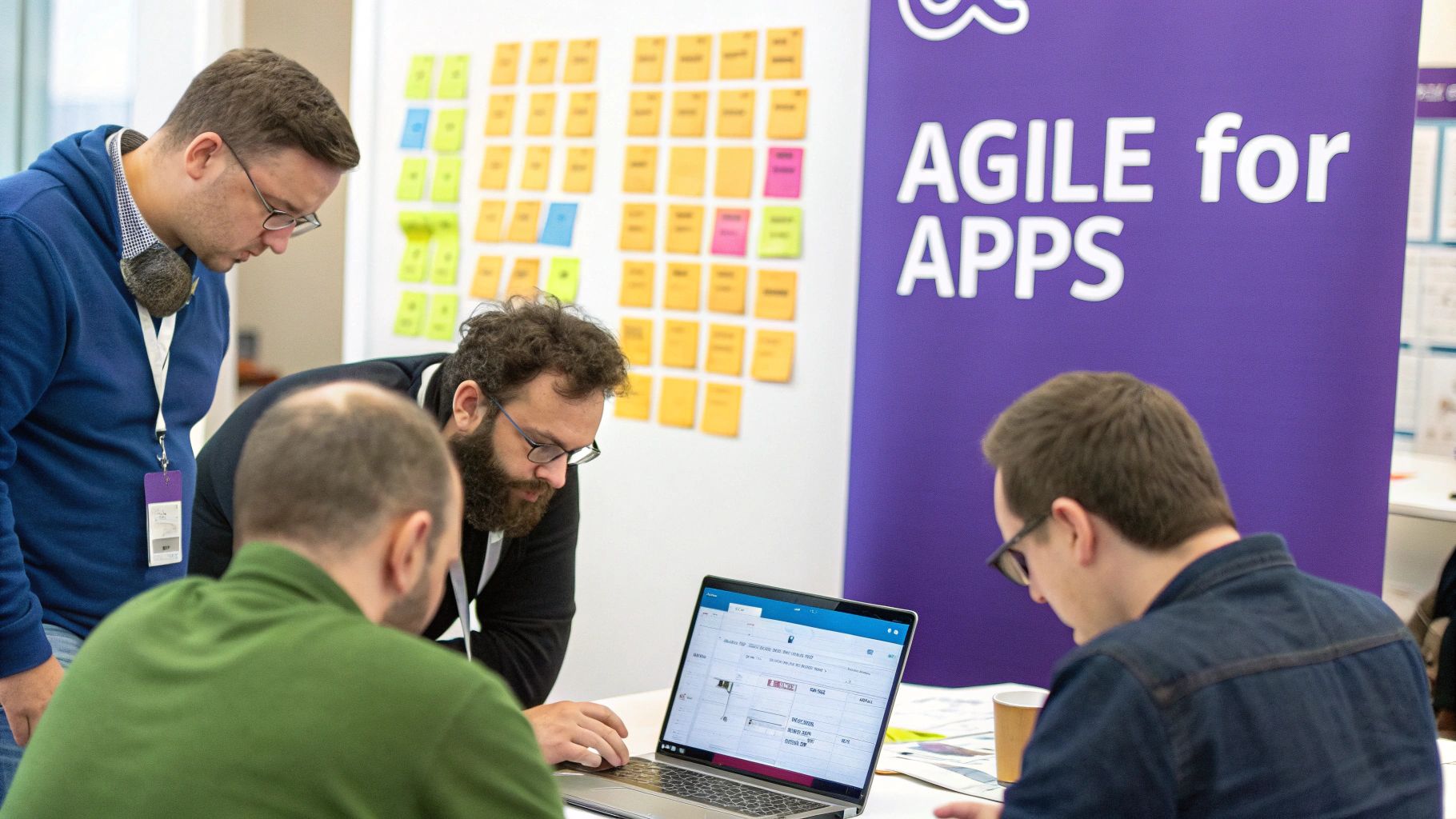
The move towards Agile in the UK software scene has been nothing short of explosive. By 2022, a massive 94% of software companies said they were using Agile in some form. That's a huge leap from just 37% back in 2021. This isn't just a trend; it's a fundamental change in how UK tech firms are structuring themselves to compete and win.
This new way of working gives teams the power to react to change on a sixpence. Instead of being locked into a rigid year-long plan, an Agile team can pivot every couple of weeks based on fresh user feedback or a sudden market shift. To really get your head around why this is so important, it's worth understanding the core benefits of Agile software development.
An online Agile course is the fastest way to equip your team with this modern mindset, enabling them to deliver superior products to clients faster and more reliably.
Driving Performance in App Development
For UK businesses working with cutting-edge tech like Flutter, this adaptability is a complete game-changer. Flutter already gives you a massive head start by letting you build beautiful, high-performance apps for mobile, web, and desktop from just one codebase, with new benchmarks placing it at the top for performance. When you pair that technical efficiency with an Agile workflow, you’ve basically created an innovation engine.
Your teams can suddenly:
- Release new features much faster by working in short, focused bursts called 'sprints'.
- Dramatically improve app quality with constant testing and feedback loops.
- Boost client satisfaction by keeping them in the loop and working transparently.
At the end of the day, adopting Agile isn't just about tweaking your processes. It's about building a culture of continuous improvement that has a direct, positive impact on your bottom line. For a deeper dive into the basics, check out our guide on what the Agile development methodology is.
What an Online Agile Course Actually Teaches
Jumping into an online Agile course is like getting a clear blueprint for building better software, faster. It’s not about dry theory; it’s about giving your team practical, real-world tools to manage projects with clarity and a shared sense of purpose. A good course essentially rebuilds your team's project management DNA from the ground up, starting with the core ideas that make Agile so powerful.
It all begins with the Agile Manifesto. Think of this less as a rigid rulebook and more as a guiding philosophy. It’s a simple but profound shift in focus: valuing people and collaboration over strict processes, and a working app over comprehensive but slow documentation. This mindset is the bedrock, especially in mobile app development where user needs and market demands can change in the blink of an eye.
Core Frameworks and Practical Skills
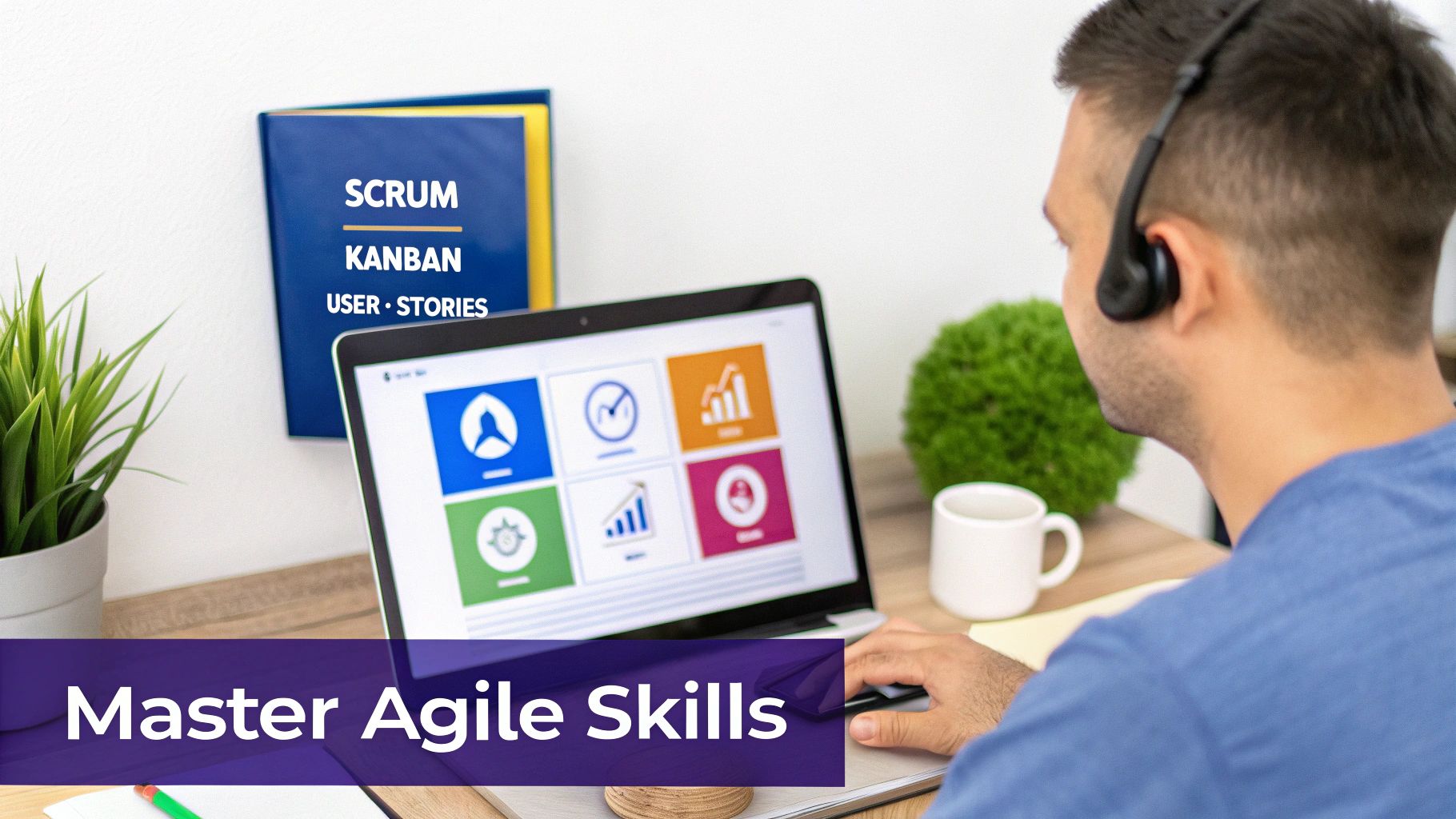
Once that philosophical foundation is set, the course gets into the nitty-gritty – the practical frameworks that bring Agile to life. You’ll almost certainly encounter the two heavyweights: Scrum and Kanban. Each offers a different, but equally valid, way to organise your work.
- Scrum: This is a highly structured approach built around short, focused work cycles called “sprints.” Your team will get hands-on with running key meetings (or "ceremonies") like sprint planning, daily stand-ups, and retrospectives. These events create a predictable rhythm that keeps everyone aligned and the project moving forward.
- Kanban: This framework is much more fluid. It’s all about visualising your workflow on a board and limiting how much work is in progress at any one time. It's fantastic for teams dealing with a continuous stream of tasks, as it makes bottlenecks immediately obvious.
Beyond the big frameworks, a solid Agile course will drill down into essential skills like writing effective user stories. Forget long, technical requirement documents. These are short, simple descriptions of a feature written from the end-user’s perspective. Learning to nail these ensures your Flutter developers are always building features that solve real problems and deliver genuine value. You can find more tips on getting your team ready by exploring how to mastering Agile Scrum training to boost team performance.
To give you a clearer picture, here’s a breakdown of the core modules you should expect to see in any worthwhile online Agile course.
Core Modules in a Typical Online Agile Course
This table outlines the essential topics and learning outcomes you should look for in a comprehensive Agile training programme.
| Module | Key Concepts Covered | Practical Skill Gained |
|---|---|---|
| Agile Fundamentals | The Agile Manifesto, 12 Principles, comparison with traditional models (like Waterfall). | Understanding the 'why' behind Agile and articulating its benefits to stakeholders. |
| Scrum Framework | Roles (Product Owner, Scrum Master), Events (Sprint Planning, Daily Stand-up), Artefacts (Product Backlog). | Running effective Scrum meetings and managing a project through defined sprints. |
| Kanban Method | Visualising workflow, limiting Work in Progress (WIP), managing flow, continuous improvement. | Setting up a Kanban board and using it to identify and resolve workflow bottlenecks. |
| User Stories & Backlog | Writing effective user stories (INVEST criteria), backlog grooming, prioritisation techniques (e.g., MoSCoW). | Creating a clear, prioritised list of work that directly ties back to user value. |
| Estimation & Planning | Story points, velocity, release planning, burndown charts. | Accurately forecasting project timelines and communicating progress effectively. |
| Team Collaboration | Fostering a collaborative environment, servant leadership, effective communication. | Facilitating productive team discussions and building a culture of shared ownership. |
These modules work together to create a holistic understanding, ensuring your team isn't just following a script but truly embodying the Agile mindset.
An effective course doesn't just teach you the "what" of Agile; it immerses your team in the "how" and "why." The goal is to develop a deep, practical understanding that translates directly into smoother workflows and better product outcomes.
From Learning to Doing
Ultimately, the goal is to turn abstract concepts into concrete actions. A comprehensive curriculum ensures your team doesn’t just walk away knowing the new buzzwords but has mastered the techniques behind them. They’ll learn how to estimate work properly, prioritise tasks based on what delivers the most business value, and run meetings that actually feel productive instead of being a drain on everyone's time.
This practical knowledge is what empowers a team to truly adapt and respond. It means that when a client requests a last-minute change to their Flutter app, your team has a process to handle it without throwing the entire project into chaos. That ability to pivot gracefully isn't magic; it's the hallmark of a truly Agile team.
The Tangible Impact on Your Flutter Development Team
So, what does all this mean for your Flutter development team? In short, adopting Agile through an online course isn’t just about shuffling your workflow around—it’s about supercharging what your team can already do. Flutter is already a fantastic tool, known for its incredible performance and the efficiency of a single codebase. When you pair that raw technical power with an Agile mindset, you’ve got a serious recipe for building standout apps.
Think of it this way: Flutter is a high-performance engine. Agile is the skilled driver who knows every corner of the track and can push that engine to its absolute limit. The two are a perfect match because Flutter development thrives on quick iterations and user feedback, which are the very heart of any Agile method.

Accelerating Time to Market
One of the first things you’ll notice is how much faster you can get new features into the hands of your users. Forget those long, drawn-out development cycles. Agile teams work in short, focused bursts called "sprints." For a Flutter team, this means they can build, test, and release a small but valuable chunk of the app every couple of weeks.
This iterative rhythm means your app is never just gathering dust, waiting for some big launch day. It's alive, constantly evolving and improving, which allows you to react to market shifts and keep one step ahead of the competition.
Reducing Risk and Improving Quality
Traditional development often shoves all the testing to the very end. The result? You discover major, expensive bugs right when you're about to go live. It’s a nightmare. Agile completely flips this on its head by weaving testing into the entire process, right from day one.
An Agile-trained Flutter team builds quality in from the start. By testing small increments of code frequently, they catch and fix issues early, preventing them from becoming significant problems down the line.
This constant loop of quality assurance creates a more stable, robust, and reliable app. The risk of a launch day disaster drops dramatically because every piece of the application has been checked and refined at every single stage.
Boosting Client Satisfaction Through Transparency
Agile creates a level of transparency that clients absolutely love. With regular check-ins, sprint reviews, and constant access to a working version of the app, stakeholders are always in the loop. They aren't left guessing; they can see real progress, give instant feedback, and feel like they’re a genuine partner in the project.
This collaborative approach gets rid of those nasty last-minute surprises and makes sure the final product is exactly what the client envisioned. For our teams, this crystal-clear communication is the secret to building strong, lasting relationships with our clients.
At the end of the day, an online agile course gives your Flutter team the structure they need to convert their technical skill into real, measurable business success. They’ll build better apps, get them to market faster, and adapt to client needs on the fly. It solidifies your reputation as a go-to expert for creating user-focused mobile apps that truly deliver.
How to Choose the Right Online Agile Course for Your Team
Investing in training is a big decision, and picking the right online agile course is what makes the difference between money well spent and money wasted. With so many options out there, it’s easy to get lost. The trick is to look past the slick marketing and focus on what will actually help your team learn and, more importantly, apply these new skills.
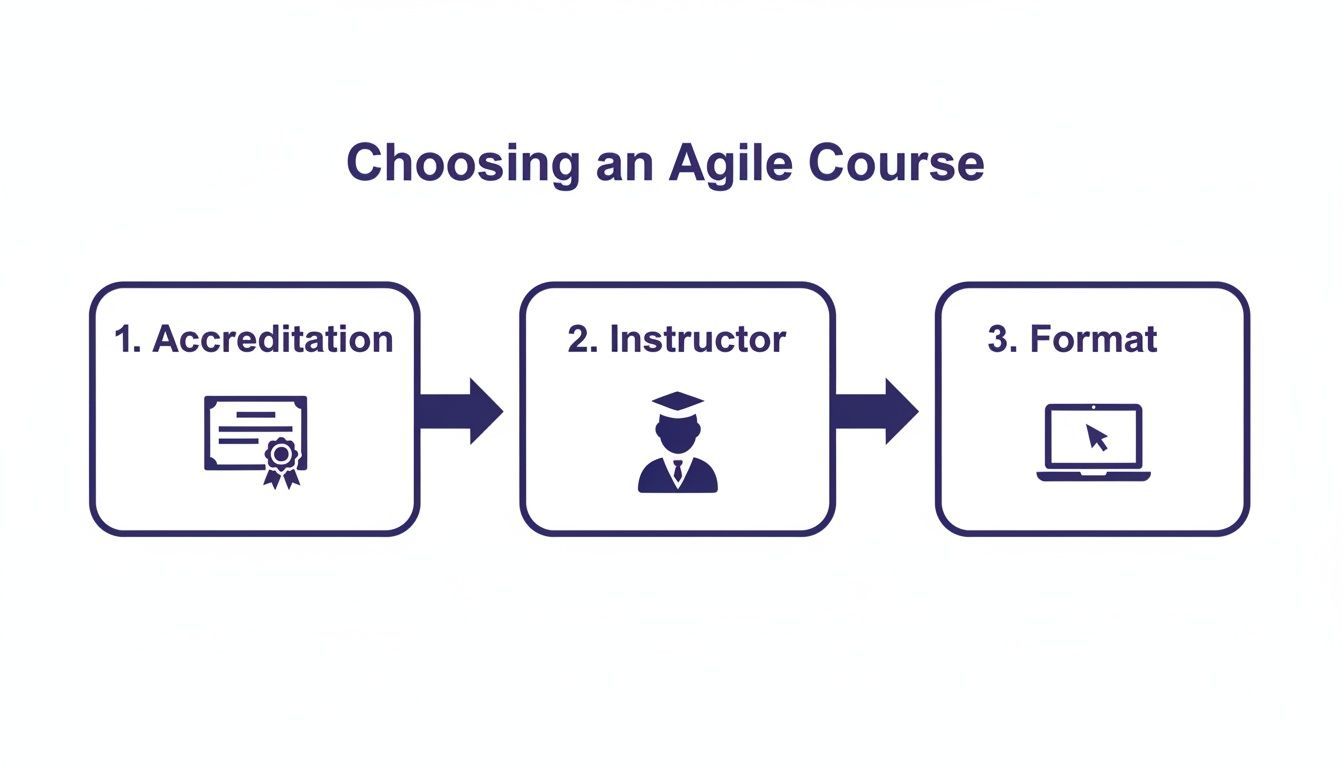
A good place to start is checking for accreditation. Look for courses endorsed by recognised bodies like Scrum.org or the Agile Alliance. Think of it as a quality seal—it tells you the curriculum is up to scratch and any certificates earned will actually mean something in the industry.
Evaluate the Instructor’s Real-World Experience
Theory is one thing, but Agile is all about what happens in the real world. This is why your instructor's background is so important; it’s a deal-breaker. You want trainers who have spent years in the trenches as Scrum Masters, Product Owners, or Agile coaches, not just people who know the textbook definitions.
Their hands-on experience is gold. They’re the ones who can share war stories about what works (and what definitely doesn't), answer those tricky "what if" questions with practical examples, and walk your team through the kinds of problems they'll genuinely face. An instructor with a deep well of experience can turn a good course into a brilliant one.
Examine the Course Format and Content
Next up, have a look at how the course is actually delivered. Is it a live, interactive workshop, or a set of pre-recorded videos you can watch anytime? Both have their pros and cons.
- Live Sessions: These are brilliant for getting real-time answers, sparking discussions, and getting direct feedback. The collaborative vibe can really help concepts stick.
- Self-Paced Courses: The big win here is flexibility. Your team can fit the learning around their project deadlines and other commitments.
Whatever the format, the course must be hands-on. Just listening to someone talk for hours isn’t going to cut it. Look for a syllabus that’s packed with practical exercises, case studies, and simulations that get people to actually use the concepts, not just memorise them.
The goal is for your team to walk away not just knowing the jargon, but feeling ready to run a sprint planning session or manage a product backlog from day one.
Prioritise Post-Course Support and Certification
The learning doesn’t stop the moment the course ends. The best providers offer support afterwards, maybe through a community forum, follow-up coaching, or a library of handy resources. This ongoing help is vital for bridging the gap between learning Agile and actually doing Agile day-to-day.
Finally, think about certification. The good news for UK businesses is that getting your team certified is more accessible than ever. The cost has dropped significantly, with courses for Professional Scrum Master (PSM I) in the UK starting from around £188, which often includes the exam fee. This makes it a realistic option for startups and smaller businesses to get their teams properly skilled up without breaking the bank. If you want to dig deeper, you can learn more about popular Agile certifications in the UK.
By weighing up these key points—accreditation, instructor experience, practical content, and ongoing support—you can find an online agile course that truly empowers your team and gives your business a lasting boost.
Putting Agile into Practice After the Course
Finishing an online Agile course is the starting line, not the finish. The real test—and where you’ll see the actual value—begins when you start weaving that classroom theory into the daily rhythm of your team’s work. Getting it right is a deliberate process, one that needs a clear roadmap to embed these new habits into your company culture.
The first step is usually the most important one. Don't try to overhaul every project at once; that’s a surefire way to create chaos and resistance. Instead, start small with a pilot project. Pick a single, well-defined project with a team that’s genuinely keen to try something new. This creates a safe space where your newly trained people can apply their skills, make a few mistakes, and build confidence without putting major company goals at risk.
Think of this pilot as your proof-of-concept. It’s your chance to show the rest of the organisation what Agile can really do.
Establishing Key Roles and Responsibilities
As you kick off your pilot, formally setting up key Agile roles is absolutely non-negotiable. These roles give the process structure and accountability, making sure the new framework is followed correctly from day one.
- Product Owner: This person is the ultimate voice of the customer. They’re responsible for shaping the project's vision, managing the product backlog, and making sure the development team is always focused on tasks that deliver the most value.
- Scrum Master: The Scrum Master isn't a traditional project manager—they’re a facilitator and a coach. Their job is to clear any roadblocks in the team's way, shield them from outside distractions, and ensure everyone is sticking to the Agile framework.
For our Flutter development teams, having these roles clearly defined is crucial. It guarantees that our high-performance code is always channelled into building features that matter, guided by a sharp product vision and protected by a dedicated facilitator. This setup lets our developers get on with what they do best: writing exceptional code.
Overcoming Common Implementation Hurdles
Change is hard, even when it’s for the better. One of the biggest obstacles is simply breaking old habits. Team members who are used to traditional, waterfall-style methods might find the radical transparency of daily stand-ups or the accountability of sprint commitments a bit uncomfortable at first. To make sure your new skills stick, it helps to get familiar with Agile Development Best Practices.
The key to a smooth transition is communication and patience. Clearly explain the 'why' behind each change, celebrate small wins publicly, and use retrospectives to create a safe space for the team to voice concerns and suggest improvements.
Managing stakeholder expectations is another big one. They need to understand that Agile isn't chaos; it’s a highly structured approach focused on delivering real value, piece by piece. Regular demos of working software are far more powerful than any status report for building trust and showing them you’re making real progress.
This is where your initial course selection really pays off. A methodical approach from the start ensures your team gets quality, relevant training that prepares them for these real-world challenges.
By following a practical roadmap like this, the knowledge gained from your online Agile course becomes more than just a certificate on the wall. It becomes a powerful engine for boosting productivity and delivering successful projects.
Common Questions About Online Agile Courses
Even when the benefits are clear, deciding to invest in an online agile course is a big step, and it’s natural to have a few questions. It’s a significant move for any team, so let's clear up some of the most common queries we hear from businesses thinking about making the switch.
We want to give you the straightforward answers you need to feel confident. We'll get into the practical side of things, from team sizes and software to how quickly you can expect to see a real return on your training investment.
Is an Online Agile Course Suitable for a Small App Development Team?
Absolutely. In fact, you could argue Agile was made for smaller, more dynamic teams. The whole philosophy—rapid cycles, tight collaboration, and getting real user feedback fast—is perfect for startups and SMEs trying to out-think and out-pace bigger, slower competitors.
An online course gives a small business the flexibility it needs. Your team can learn and upskill without having to down tools on critical client work. It’s an approach that scales with you and starts delivering value from day one.
How Quickly Will We See Results After Implementing Agile?
While truly mastering Agile is more of a marathon than a sprint, you'll start noticing small, positive changes almost straight away. The simple act of holding daily stand-ups can massively improve communication and get everyone on the same page within the first week.
Teams often tell us they have a much clearer sense of project priorities and that morale has improved within the first few sprints (usually 2-4 weeks). The bigger wins, like faster delivery times and measurable bumps in product quality, typically start showing up within the first 2-3 months as everyone gets comfortable with the new rhythm.
Do We Need Specialised Software to Use Agile?
Not at all. At its heart, Agile is about mindset and process, not technology. You can get started with the absolute basics using nothing more than a whiteboard and a few packs of sticky notes.
That said, most teams—especially if they’re working remotely—find that project management software built for Agile workflows is a huge help. Tools like Jira, Trello, or Asana are designed to support frameworks like Scrum and Kanban, making it much easier to see progress at a glance and manage your backlog. Many courses will introduce these tools, but the core lessons work with or without them.
What Is the Difference Between Agile and Scrum?
This is a brilliant and very common question. The easiest way to think about it is that Agile is the philosophy, while Scrum is a specific framework for putting that philosophy into practice.
- Agile: This is the big-picture mindset. It’s a commitment to being flexible, working together, and focusing on delivering value to the customer in small, iterative steps. It's the ‘why’ behind what you do.
- Scrum: This is one of the most popular ways to actually do Agile. It gives you a structure, complete with defined roles (like a Scrum Master), events (like Sprints and Daily Stand-ups), and artefacts (like the Product Backlog). It’s the ‘how’.
A good online agile course will teach you the Agile philosophy first, making sure your team really gets the core principles. Then, it will show you how to use a practical framework like Scrum to bring those principles to life in your day-to-day work, especially on high-performance projects like Flutter app development.
At App Developer UK, we combine the power of Flutter with the efficiency of Agile methodologies to build exceptional mobile applications. If you're ready to see how our expert, UK-based team can bring your vision to life, get in touch with us today. Find out more at https://app-developer.uk.